
Cabinet Layout Mistakes Homeowners Regret
When planning a kitchen remodel, cabinet layout is one of the most important decisions you’ll make—and also one of the easiest places to make costly mistakes. While finishes and colors get most of the attention, layout errors often reveal themselves later through daily frustration, wasted space, or limited functionality.
Many homeowners don’t realize these issues until after installation. Understanding the most common cabinet layout mistakes can help you avoid regrets and design a kitchen that truly works for your lifestyle.
Not Planning Storage Based on Daily Use
One of the most common mistakes is designing cabinets without considering how the kitchen is actually used. A layout may look good on paper but fall short in real life.
Common issues include:
Too many upper cabinets and not enough lower storage
Shallow base cabinets that don’t fit cookware
Poor placement of frequently used items
Storage zones that don’t align with cooking habits
A successful layout groups storage around tasks—prep, cooking, cleaning, and serving—so everything is within easy reach.

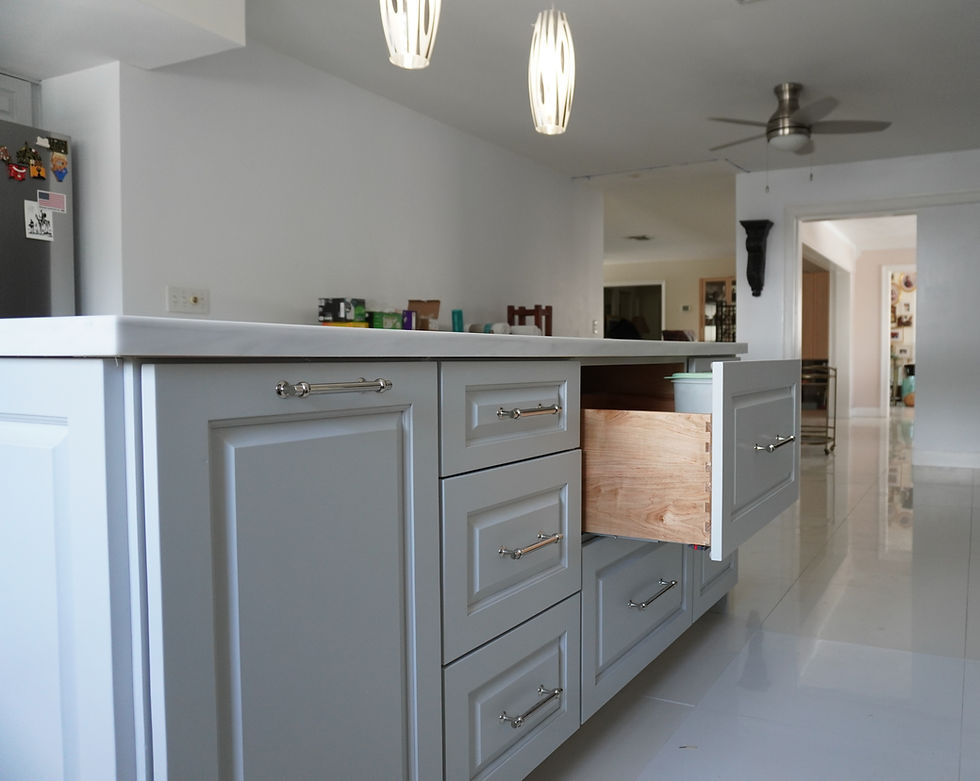
Choosing Too Many Standard Cabinets Instead of Drawers
Traditional base cabinets with shelves often waste space and make it hard to access items in the back. Homeowners frequently regret not incorporating more drawers.
Why drawers matter:
Full visibility of contents
Easier access without bending or kneeling
Better organization for pots, pans, and dishes
More efficient use of vertical space
Deep drawers are one of the most requested upgrades after a kitchen is already completed.
Overlooking the Importance of the Work Triangle
The relationship between the sink, stove, and refrigerator still matters, even in modern kitchens. Poor spacing between these elements leads to unnecessary movement and inefficiency.
Layout problems include:
Appliances placed too far apart
Islands blocking traffic flow
Tight corners near major work zones
Dishwashers interfering with walkways
A well-planned layout supports smooth movement and keeps the kitchen comfortable, even during busy moments.
Installing Cabinets That Are Too Shallow or Too Deep
Cabinet depth plays a bigger role than many homeowners realize. Improper depth can affect both storage capacity and comfort.
Common regrets include:
Upper cabinets that feel too deep and heavy
Base cabinets that don’t accommodate large cookware
Pantry cabinets that are too narrow to be useful
Islands that crowd walkways
Proper depth ensures cabinets are functional without overwhelming the space.
Ignoring Pantry Planning
Many kitchens suffer from insufficient pantry storage or poorly designed pantry layouts. Homeowners often underestimate how much storage they need.
Pantry-related mistakes include:
Not including a pantry at all
Shelves that are too deep to organize
Lack of pull-out storage
Poor visibility of items
A well-designed pantry keeps clutter off counters and makes grocery storage easier and more efficient.
Forgetting About Corner Cabinet Solutions
Corner cabinets are notorious for becoming wasted space if not planned properly. Simple shelving often leaves large areas unused.
Better corner solutions include:
Lazy Susan systems
Pull-out corner drawers
Swing-out shelving
Blind corner organizers
Homeowners often regret not upgrading corners once they realize how much storage potential was lost.
Placing Upper Cabinets Too High or Too Low
Improper cabinet height can impact both usability and aesthetics. Cabinets placed too high are hard to reach, while cabinets placed too low can make the space feel cramped.
Common height mistakes:
Upper cabinets that don’t align with appliances
Cabinets that stop too far below the ceiling
Uneven spacing that disrupts visual flow
Full-height cabinetry or carefully planned spacing creates a cleaner, more intentional design.
Not Planning for Trash and Recycling Storage
Another common regret is forgetting to plan for trash and recycling early in the design process.
Issues include:
Freestanding bins taking up floor space
Under-sink cabinets that feel cluttered
Lack of separation for recycling
Built-in trash solutions keep kitchens cleaner and more organized.
Underestimating Island Storage Needs
Kitchen islands are often treated as seating-only features, but homeowners frequently wish they had added more storage.
Missed island opportunities include:
No drawers for utensils or cookware
No cabinets for serving items
No space for small appliances
A well-designed island can significantly increase storage and functionality.
Skipping Professional Layout Guidance
Perhaps the biggest regret of all is not consulting a professional early in the process. Cabinet layout mistakes are much harder—and more expensive—to fix after installation.
Professional planning helps with:
Storage optimization
Traffic flow
Appliance spacing
Long-term functionality
Avoiding costly rework
Expert guidance ensures your layout works not just visually, but practically.
FAQs About Cabinet Layout Planning
Q: Can layout mistakes be fixed after installation?
A: Some can, but many require costly changes. Planning ahead is far more efficient.
Q: Are custom cabinets better for avoiding layout issues?
A: Yes. Custom cabinetry allows layouts to be tailored to your space and needs.
Q: How many drawers should a kitchen have?
A: Most modern kitchens benefit from drawers in nearly all base cabinet locations.
Q: Should cabinets go to the ceiling?
A: In most cases, yes. Full-height cabinets improve storage and visual flow.
Final Thoughts
Cabinet layout has a bigger impact on daily life than almost any other kitchen design choice. Avoiding common mistakes ensures your kitchen remains functional, comfortable, and enjoyable for years to come.
If you’re planning a remodel or redesigning your cabinetry, professional layout planning can save time, money, and frustration.
Schedule your free consultation and explore cabinetry solutions designed to work beautifully in Florida homes.
Comments