
Small Kitchen? How to Make Your Cabinets Feel Bigger
- Jesse Forrest
- Sep 5, 2025
- 4 min read
A compact kitchen can still feel open, bright, and highly functional—especially when the cabinetry is designed with space-enhancing techniques in mind. Whether you're living in a condo, apartment, or cozy home, your kitchen cabinets play a major role in the perception of space and usability.
This guide explores practical and visual strategies to make kitchen cabinets feel larger, smarter, and more open—without physically expanding your space.
Why Cabinet Perception Matters in Small Kitchens
In small kitchens, every detail contributes to how spacious (or cramped) the space feels. Cabinets take up the largest visual and physical footprint, making them a critical element in kitchen design.
By optimizing layout, choosing the right colors and finishes, and using creative storage strategies, homeowners can dramatically increase the functionality and openness of their kitchen without major renovations.

1. Use Light Colors to Brighten and Open the Room
Color plays a powerful role in perceived space. Light cabinet colors reflect natural and artificial light, helping the room feel airier and more expansive.
Best light-enhancing cabinet colors:
Soft white
Warm cream
Light greige
Pale sage or coastal blue
Sand or driftwood tones
Avoid overly saturated or dark colors on upper cabinets, as these can visually “lower” the ceiling and make the room feel boxed in.
2. Opt for Glossy or Satin Finishes
A reflective surface increases the amount of light bouncing around your kitchen. Glossy and satin cabinet finishes—not matte—make your space feel bigger and more open.
Tip: If you prefer a soft matte look, consider using it only on lower cabinets and keep the uppers in a semi-gloss or satin for balance.
3. Extend Cabinets to the Ceiling
Many kitchens stop cabinetry a foot or two short of the ceiling, which wastes valuable vertical space and draws the eye downward. In small kitchens, taking cabinetry all the way to the ceiling creates a cohesive look and adds extra storage.
Benefits:
Reduces visual clutter
Increases vertical storage
Makes the ceiling feel taller
If you prefer open space above your cabinets, consider displaying minimal décor that blends with the wall to avoid crowding.
4. Choose Sleek, Minimal Hardware
Large or overly ornate hardware can visually weigh down cabinetry. In a small kitchen, keep handles and knobs clean, minimal, and proportionate.
Recommended options:
Slim bar pulls
Hidden edge pulls
Finger grooves or push-to-open systems
Sticking with one hardware finish—such as brushed nickel or matte black—creates unity and visual calm.
5. Use Glass or Open Cabinet Fronts
Incorporating glass-front doors or open shelving breaks up the solid mass of cabinetry and allows light and depth to enter the design.
Glass-front ideas:
Frosted or seeded glass for a semi-private look
Clear glass for decorative dishware
Interior cabinet lighting for extra glow
Limit open shelving to small sections to avoid clutter and maintain clean lines.
6. Incorporate Open Shelving Selectively
Open shelving works well in small kitchens when used sparingly and strategically. It offers a lighter visual alternative to traditional upper cabinets.
Best practices:
Use on one wall only
Keep items minimal and organized
Combine with wall-mounted lighting to increase brightness
Floating shelves made from wood or matching cabinet material offer both storage and aesthetic balance.
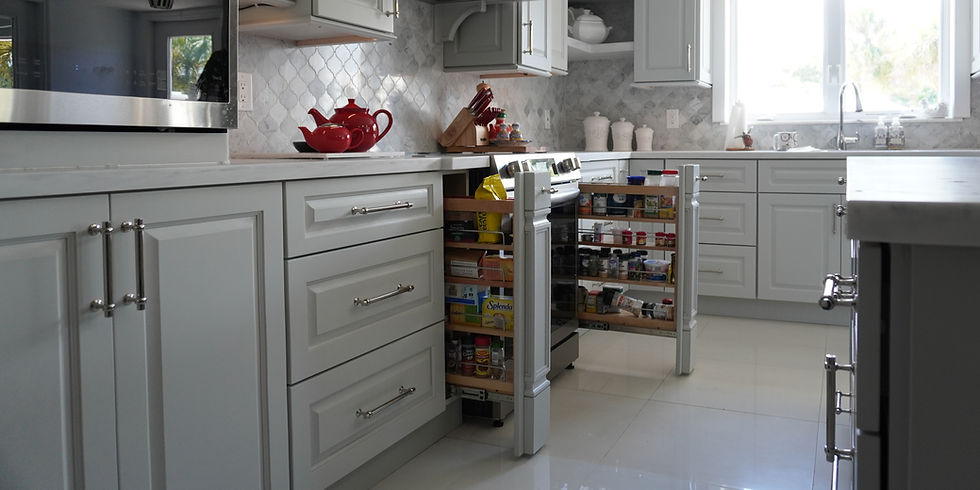
7. Maximize Interior Cabinet Storage
Sometimes, making your cabinets feel bigger is about making them function bigger. Custom interior storage solutions allow you to store more in less space—reducing visual clutter.
Interior upgrades:
Pull-out trays or shelves
Vertical pan storage
Built-in spice racks
Lazy Susans for corners
Drawer dividers and deep drawers for pots/pans
Reducing countertop clutter makes the whole kitchen feel more open.
8. Add Under-Cabinet and In-Cabinet Lighting
Lighting enhances visibility and depth in tight kitchens. Under-cabinet lights reduce shadows and make workspaces feel larger. Interior cabinet lights create a luxurious and open feeling, especially behind glass-front doors.
Lighting solutions:
LED strip lighting under cabinets
Motion-sensor lighting inside deep drawers
Toe-kick LED lighting for added floor visibility
Layered lighting not only improves function but makes the cabinetry feel more expansive.
9. Stick to One Tone for Cabinets and Walls
Visual unity increases the feeling of space. If your cabinets are white, painting the walls a similar light tone helps them blend seamlessly. This lack of contrast tricks the eye into perceiving a larger room.
Examples:
White cabinets + white backsplash + pale wall
Warm greige cabinets + soft stone-toned walls
Sage cabinetry + dusty green accents
Avoid high-contrast combinations like dark cabinets and white walls in small kitchens unless balanced carefully.
10. Keep It Simple: Reduce Cabinet Crowding
Less is more in small kitchens. Too many upper cabinets or decorative details can make the space feel boxed in. Instead, focus on clean lines, functional layouts, and smart vertical storage.
Simplification tips:
Avoid crown molding in favor of sleek flat panels
Choose flat-front or shaker-style doors
Use symmetrical cabinet groupings
Minimalist design often creates the most usable space.
FAQs: Small Kitchen Cabinet Design
1. How can I increase storage in a small kitchen without adding cabinets?
Maximize existing cabinets with internal pull-outs, drawer organizers, and vertical storage tools. Consider open shelving or built-ins in adjacent rooms for overflow.
2. Are white cabinets best for small kitchens?
White or light-toned cabinets are excellent for brightening and visually enlarging small kitchens. However, soft neutrals or muted coastal colors also work beautifully.
3. Do glass-front cabinets really help a space feel bigger?
Yes. Glass allows light and depth to pass through, breaking up solid cabinet surfaces and making the room feel airier.
4. Can I remove some upper cabinets without losing too much storage?
If you add deep drawers or tall pantry pull-outs below, removing one or two upper cabinets can enhance space perception without sacrificing storage.
5. Should I avoid islands in a small kitchen?
Not necessarily. Small islands with storage or rolling carts can improve function—but they must be sized appropriately to avoid disrupting flow.
Final Thoughts: Let Your Cabinets Work Smarter
When it comes to small kitchens, it’s not just about square footage—it’s about how the space is used and perceived. With the right combination of cabinet layout, color, lighting, and storage, your kitchen can feel larger, brighter, and more enjoyable to work in.
Whether you’re refreshing existing cabinets or investing in a new design, focusing on clean lines, reflective surfaces, and smart storage solutions will ensure your kitchen looks as big as it can feel.
If you’re ready for a cabinetry makeover tailored to your small kitchen, our team offers custom design solutions that maximize every inch—beautifully.

Comments